

"Do it myself" isn't always the best plan
What a gallon of spilled ranch dressing taught me about asking for help

I have always sucked at asking people to help me.
From the time I was a child, like a stubborn toddler, I adopted “Do it myself” as my mantra.
Maybe it happened because I was the oldest child in my family, and by the time I was five, my mom was encouraging me to do things for myself so that she could tend to the needs of my younger brother.
Maybe it happened because I was an academic overachiever who learned that I could almost always accomplish whatever I wanted to through hard work.
Maybe it happened because I didn’t score a single point on my 4th-grade basketball team, which turned me against team sports and exacerbated my tendency to rely on myself to accomplish things.
But for whatever reason, I spent much of my life being happily self-reliant.
It also probably didn’t help that we live in a culture that celebrates self-reliance.
We learn about how American frontiersmen (and women) pulled themselves up by their own bootstraps, staked their claims on a homestead, and extended the country from sea to shining sea.
We’re told tales of immigrant ancestors who established lives in a new land with little more than sheer determination and hard work to power them through.
And who hasn’t heard that God helps those who help themselves?
Our culture’s celebration of self-sufficiency makes it hard to learn a vital lesson: Asking for and accepting help is not a character flaw or a sign of weakness.

Oddly enough, my chance to learn this lesson began in a parking lot as a gallon of ranch dressing hit the ground and exploded over my shoes. I don’t usually traffic in such large quantities of salad dressing, but I had a crowd to feed.
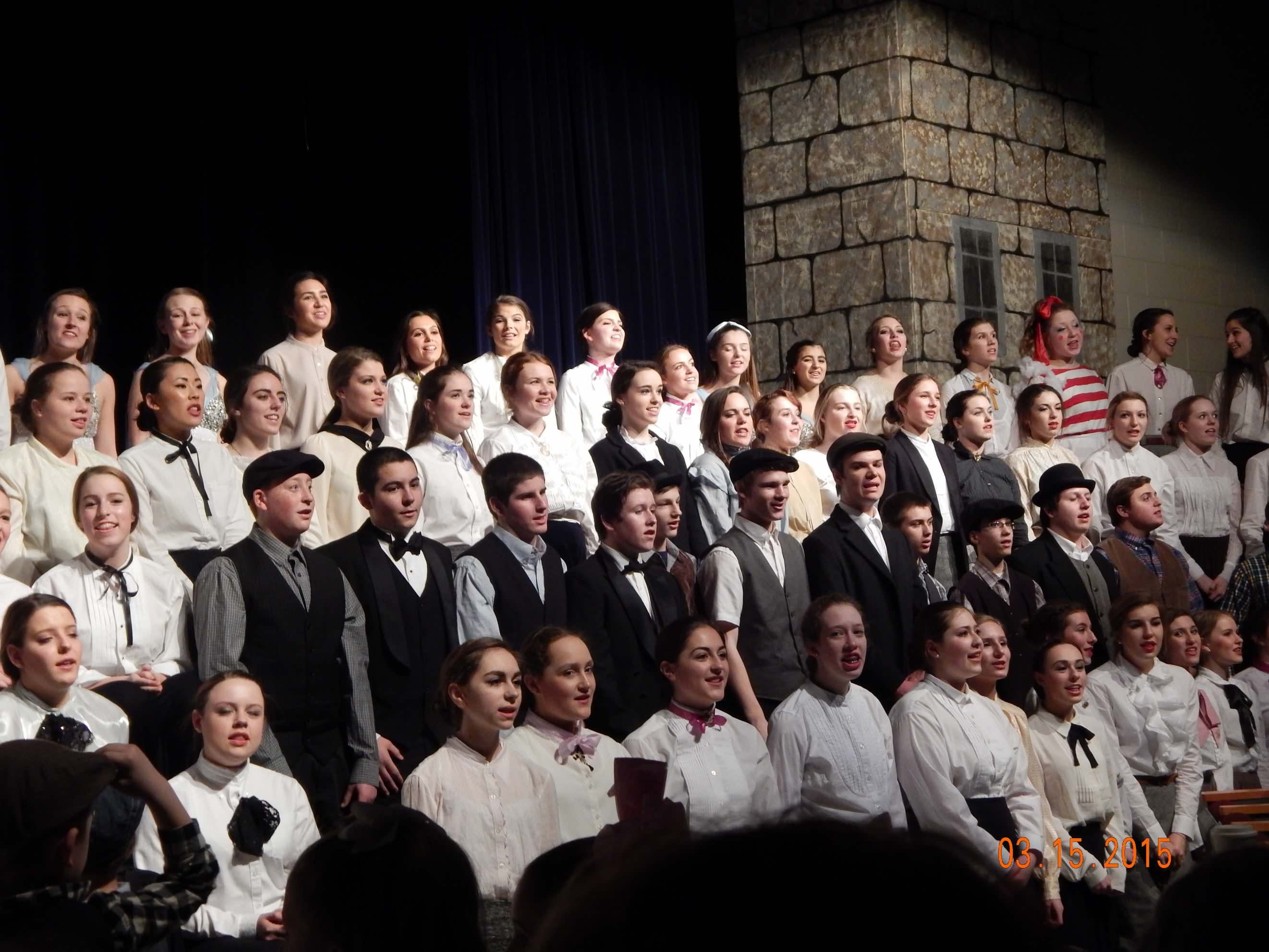
My freshman daughter had joined her high school’s show choir. As showtime approached, rehearsals ramped up and went late into the evening. Parents were asked to volunteer to supply hot meals to give the kids better dinner options than vending machines.
I wanted to help, and since I didn’t know any better, I figured that good old self-reliant me could figure out how to feed 75 people by myself. After all, if I could feed 25 people for a family birthday party, all I had to do was multiply by three.
I knew enough to know that I didn’t want to cater the meal entirely from scratch, so I ordered three big-ass aluminum trays of pulled pork and several dozen rolls from a local butcher shop I’d patronized before. I also ordered three pans of salad, which came with massive jugs of the dressing that ended up seeping into the macadam when things went awry as I attempted to load everything into the back of my SUV.
As I stood there humiliated in a puddle of salad dressing, I was alarmed to see a fellow shopper headed my way. My first inclination was to deal with the mess I’d made myself. But before I knew it, she was helping me pick up the pieces and handing me some napkins she’d had in her car so I could clean off my hands before I went inside to secure a replacement gallon of dressing.
I was grateful for the assistance but still eager to prove I was up to providing dinner for 75 all by myself.
Later that day, additional exercises reinforced why self-reliance isn’t always your best option.
First, I had to heat up all the pans in my kitchen so that the food would be warm when it hit the chafing dishes at school. Though our double oven made it doable, I was starting to feel like a one-armed caterer. Next, there was the agony of transporting everything to school while dealing with my newfound phobia of spilling dressing.
Fortunately, another veteran volunteer was in the cafeteria to help set everything up and assist with serving the multitudes.
I managed to do it mostly by myself, but it was not an enjoyable experience.
When spring rolled around, my daughter signed up to be in her school’s production of Mary Poppins. Of course, they were looking for parent volunteers again, and from the sounds of it, serving meals would be quite atrocious—at least 125 kids were part of the cast and crew for the musical.
I wanted to help, but I wasn’t sure that self-reliant me was up to the task. I weighed whether it was time to consider becoming a costume mom instead.
Providentially, before the volunteer sign-up sheets came out, a mom I knew asked if I wanted to join a group of moms from my daughters’ elementary school who were organizing a “breakfast for dinner” meal. Before you could say supercalifragilisticexpialidocious, I was in.
In the second part of the lesson about the limitations of self-reliance, I discovered how much better it was to be part of a team. Yes, preparing scrambled eggs for 125 people was work (DM me if you need a recipe for oven-baked scrambled eggs to serve a crowd), but at least I didn’t have to produce the whole meal myself. And the camaraderie of serving as part of a crew was a bonus that I hadn’t gotten to enjoy when I tried to pull off the whole shebang on my own.
Lesson learned: Sometimes self-reliance doesn’t do you any favors.
Could I serve dinner to dozens of people by myself? Yes.
Was this the best way to approach the challenge? No.

If you find yourself resisting offers from other people to help you, beware
It’s usually a sign that you’re trying to be too self-reliant. The fact that I was tempted to turn away the assistance from the nice lady who so willingly approached me when I was drenched in dressing because I felt embarrassed was a danger sign–foolish pride had me convinced I could do it all myself.
If someone offers to assist and you’re inclined to decline, ask yourself: Why won’t I let this other person help me? And if you don’t have a good answer, change your response.
Accepting help isn’t a sign of weakness; it's a sign of healthy humility. And it doesn’t mean that you’re imposing on somebody else. As you may have noticed when you’ve lent a hand to someone, being able to help usually makes the helper feel good. So don’t block the flow of grace.
The key to life isn’t being able to handle everything by yourself
Believing you can make it through life entirely under your own power is folly. Humans are designed to rely on and partner with other people. Thinking that you can take care of all of your own needs is arrogant.
Since I learned my lesson about self-reliance, I have come to realize that, more often than not, life tends to be better when you tackle it with other people. There’s much to be said for doing things in partnership with others or as part of a community.
Relying on other people isn’t just a better way to function; it also comes with other benefits, like feeling supported, being a part of something larger and more powerful than just you, and making whatever task or situation is at hand more enjoyable.
‘Many hands make light work’ isn’t just a saying; it’s the truth. Hopefully, you won’t have to drop a gallon of salad dressing in a parking lot to learn that lesson.