

What I discovered when I time-traveled through my hometown newspaper's archive
Many newspaper functions have migrated elsewhere, but they still play one role we can't afford to lose

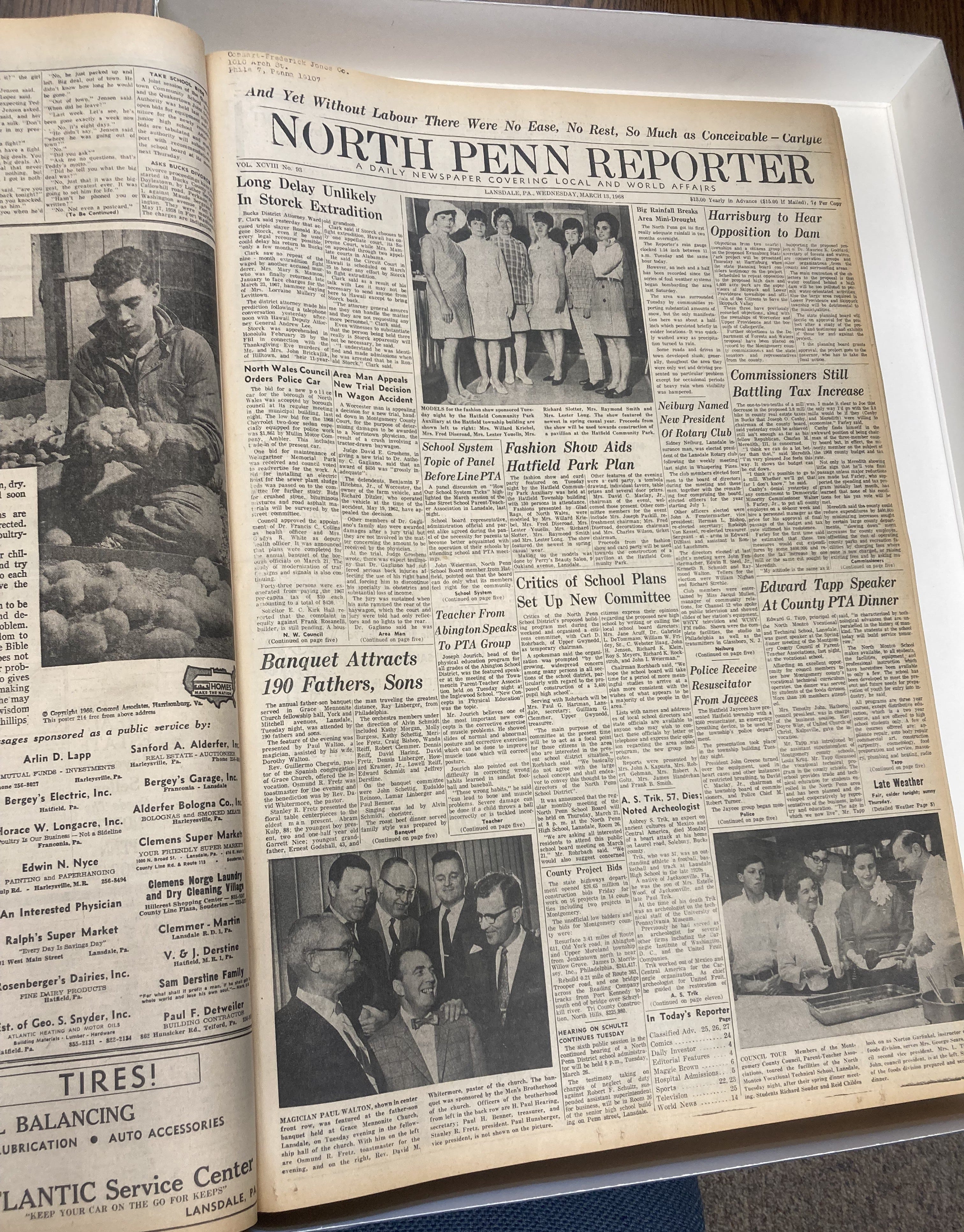
Recently I’ve been working on a personal history project I’ve titled Big House on the Prairie. It’s the tale of my family’s move from a little brick twin in the city to a sprawling single colonial on the suburban frontier in the 70s.
As a child, I only cared about what my new school would be like and whether I’d make friends. As an adult, I wonder why my parents decided to leave the city behind. I was also curious whether the not-in-my-backyard sentiment so common today when farmland is about to sprout houses was a thing back then too.
So, in addition to sifting through our family photo albums, I headed to the local historical society, which houses the archives of my hometown’s newspaper.
Although many of the issues I needed to access were online, the issues from the 1960s haven’t been converted yet. So I needed to thumb through volumes of yellowed newspapers, which was like opening a time capsule.
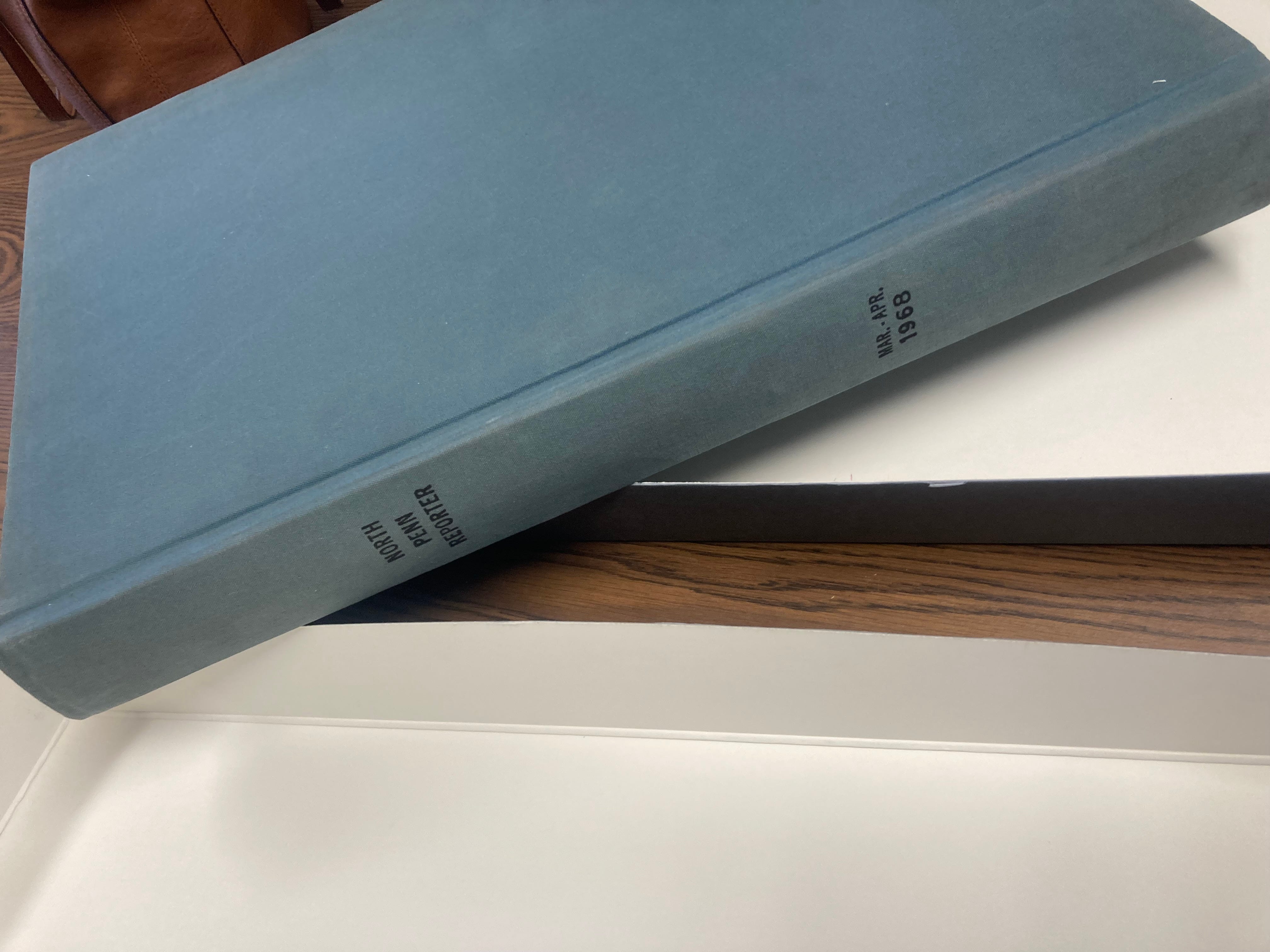
As expected, I found accounts of township and school board meetings, as well as plenty of reports from the police blotter (it was stunning to read how common fatal car accidents were before safety belts were required). But much of the content was the kind of information that I had forgotten was once the lifeblood of newspapers.
A primitive version of Facebook and Instagram
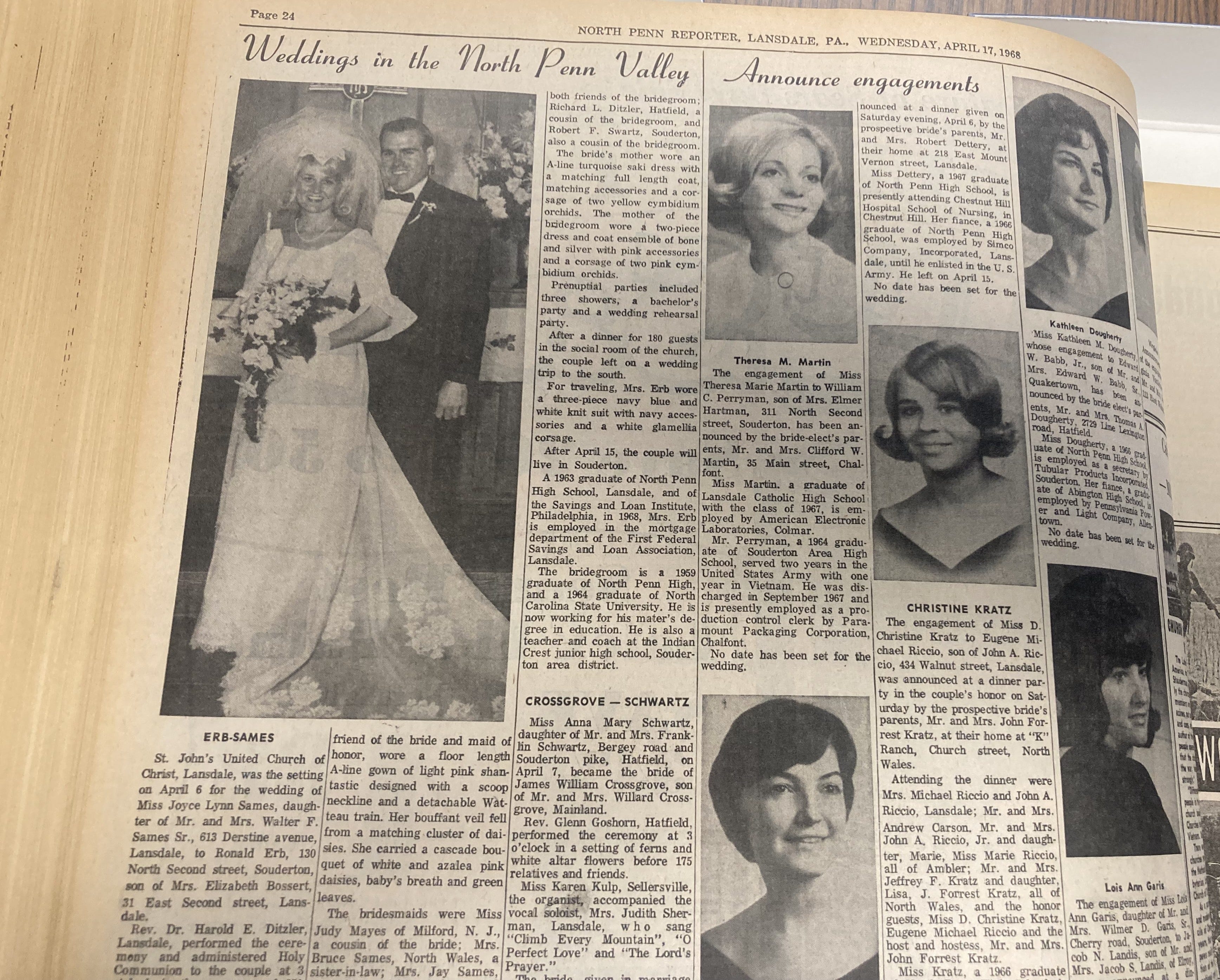
I’m old enough to remember when engagements were announced in the newspaper, but I was surprised to see that 1960s engagement photos only included the brides-to-be.
I expected to find spelling bee victors, history award winners, couples celebrating anniversaries, and honor roll students enjoying their moments in the sun. However, I was amazed to see this record of hospital admissions.
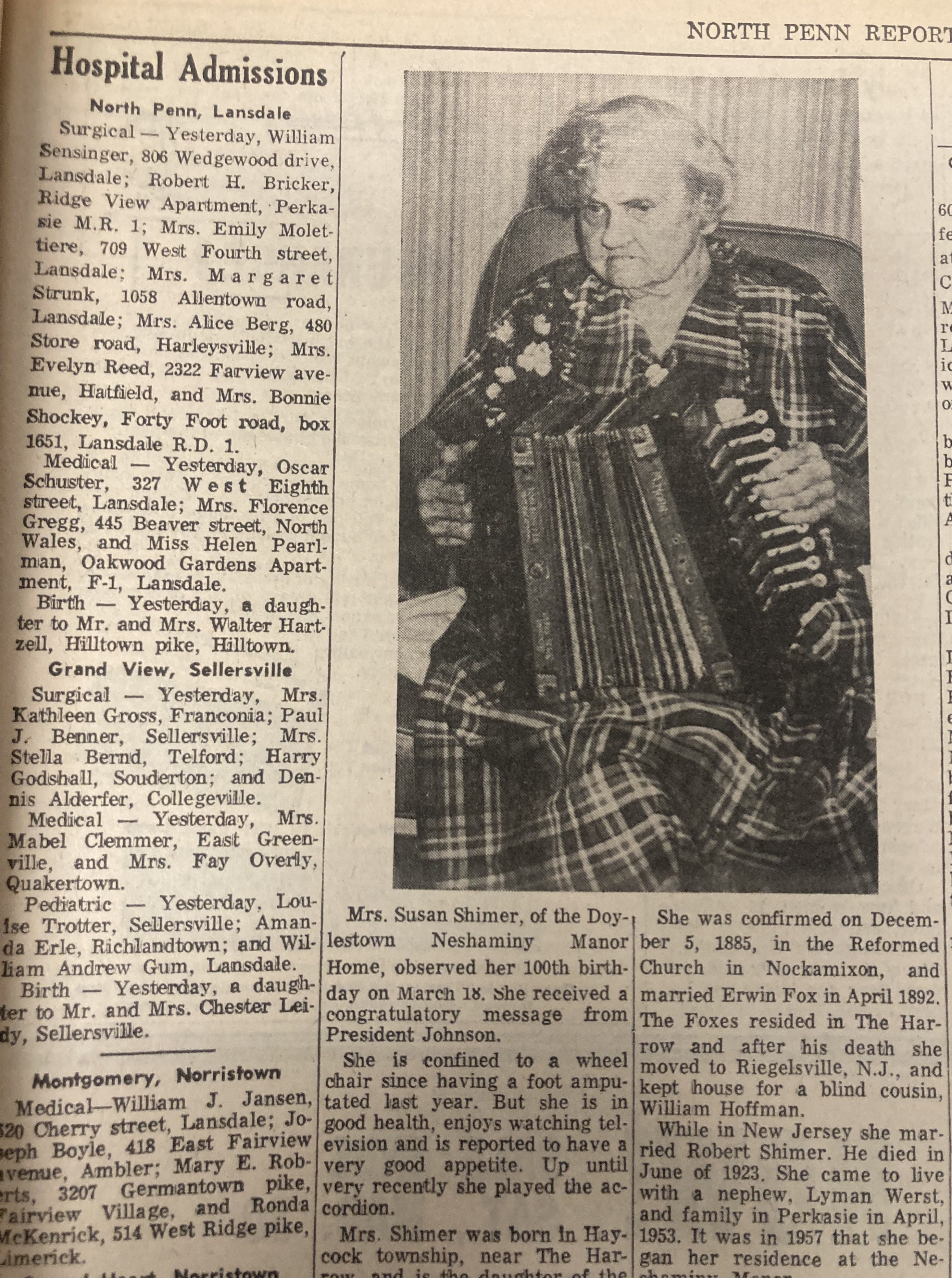
It was probably nice to know when babies arrived. And I suppose knowing who’d been hospitalized helped you to be a good neighbor; if you saw someone had been in the hospital, you could follow up and bring the family a meal or offer other assistance.
Believe it or not, an entire column was dedicated to reporting about who visited whose house for dinner. I guess even in the 60s, you weren’t entirely protected from FOMO since you could still see if everyone but you had been invited to a dinner party.
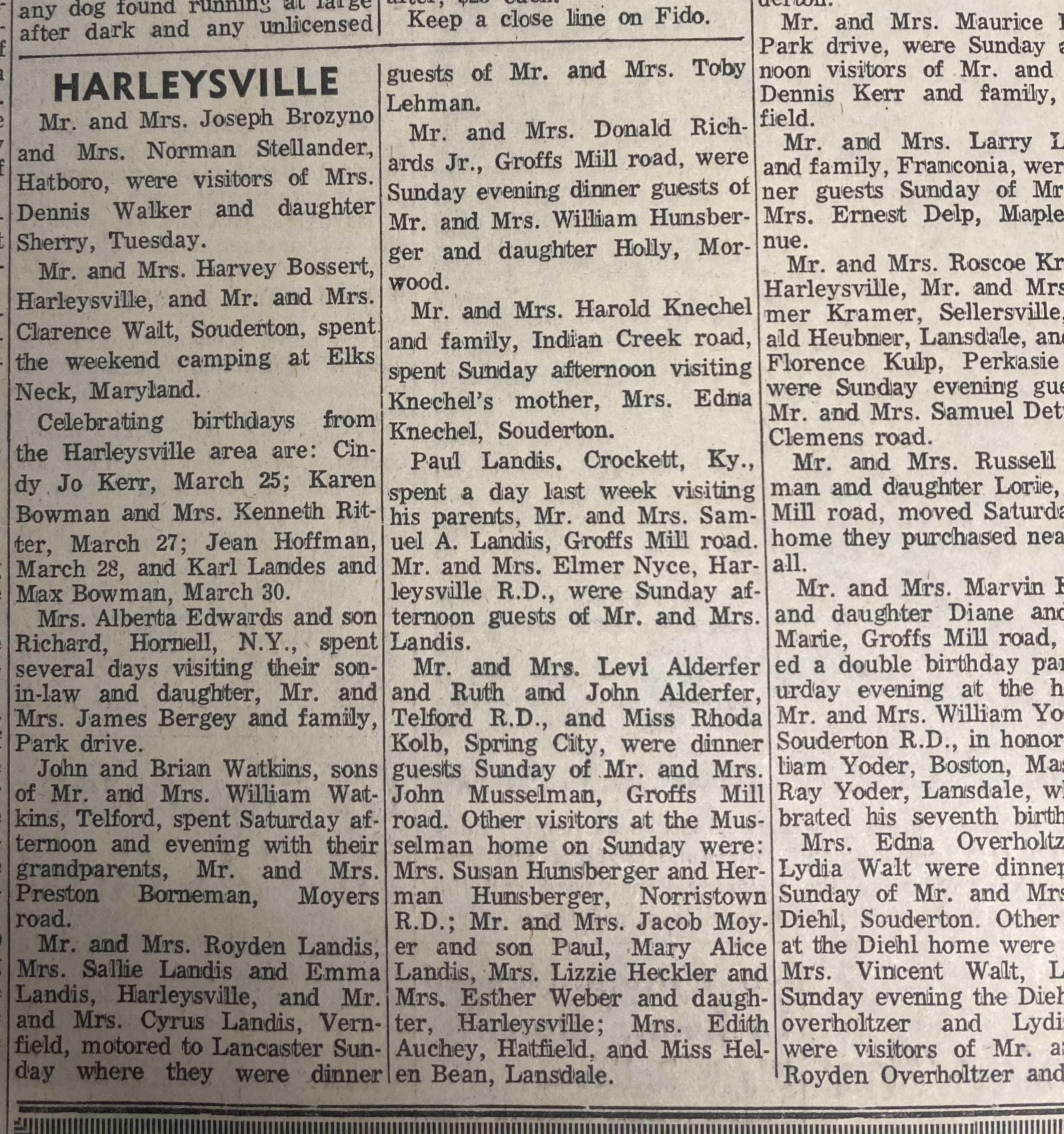
It seemed incredible that these mundane details of social comings and goings were printed in the paper until I realized that back then, local newspapers served up the details of daily life that Facebook and Instagram do today. Before social media, newspapers were the best way to keep tabs on the personal lives of your friends and neighbors.
Where basic information used to appear
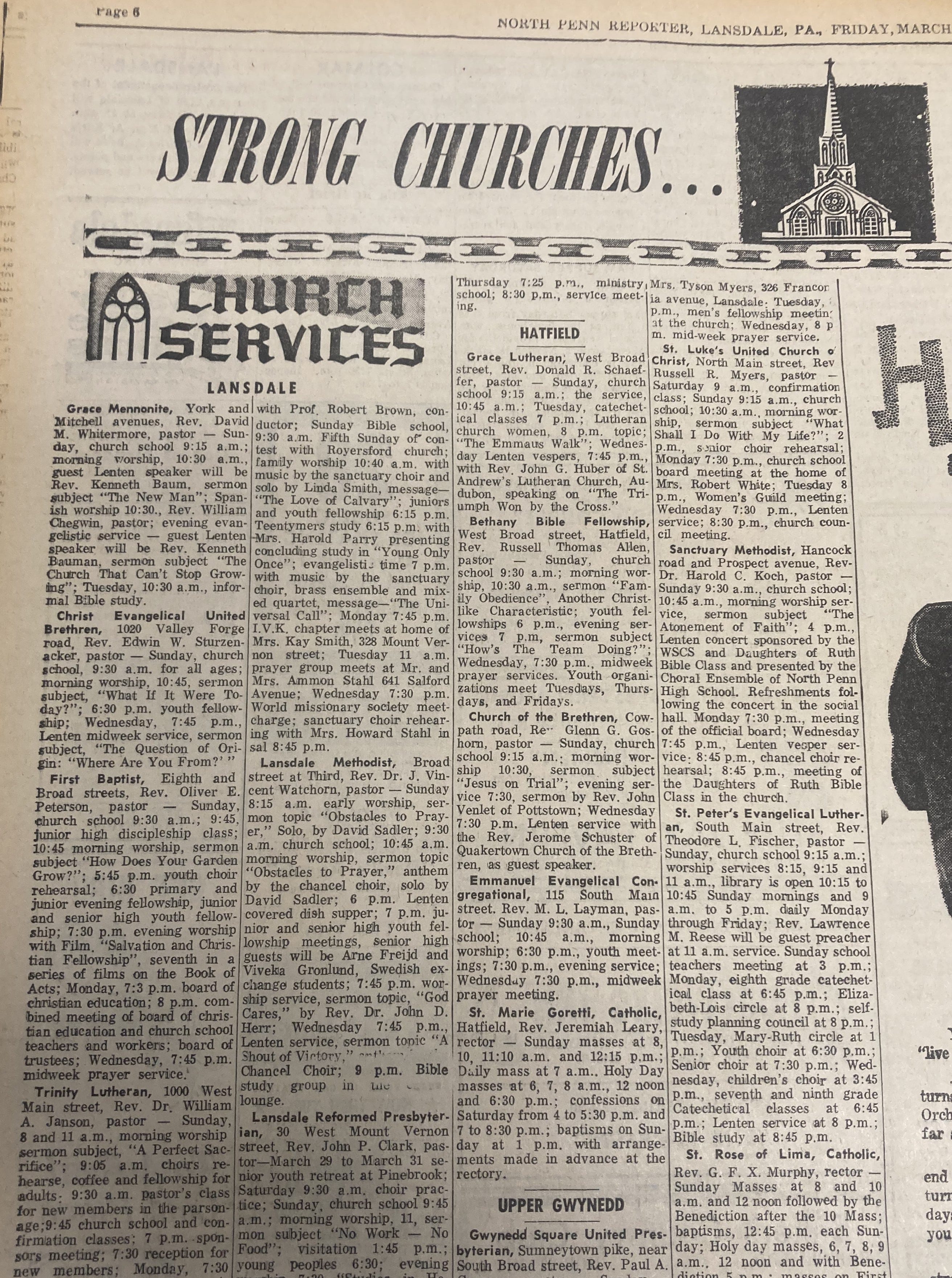
It seemed a little strange to me at first that every Friday edition featured an exhaustive listing of the service times for every church in the region. Then I realized that in pre-internet times, this was how, short of making many phone calls, new residents or someone who decided to get back into the habit of attending services learned about their church-going options.
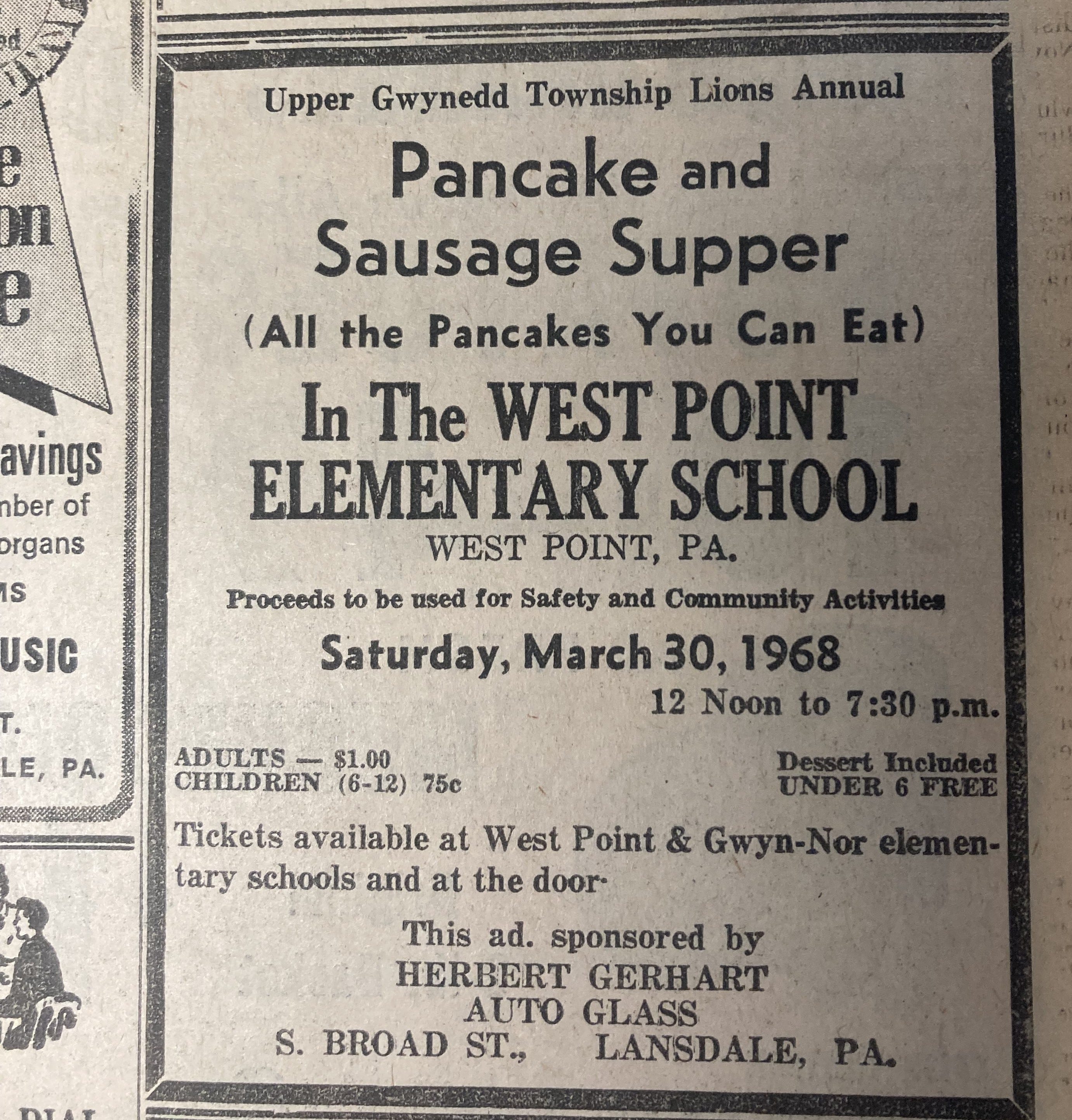
Similarly, at first it seemed kind of silly that a whole ad was devoted to a simple pancake supper. But then I realized–how else did you get the word out about community events in the era before social media and email lists?
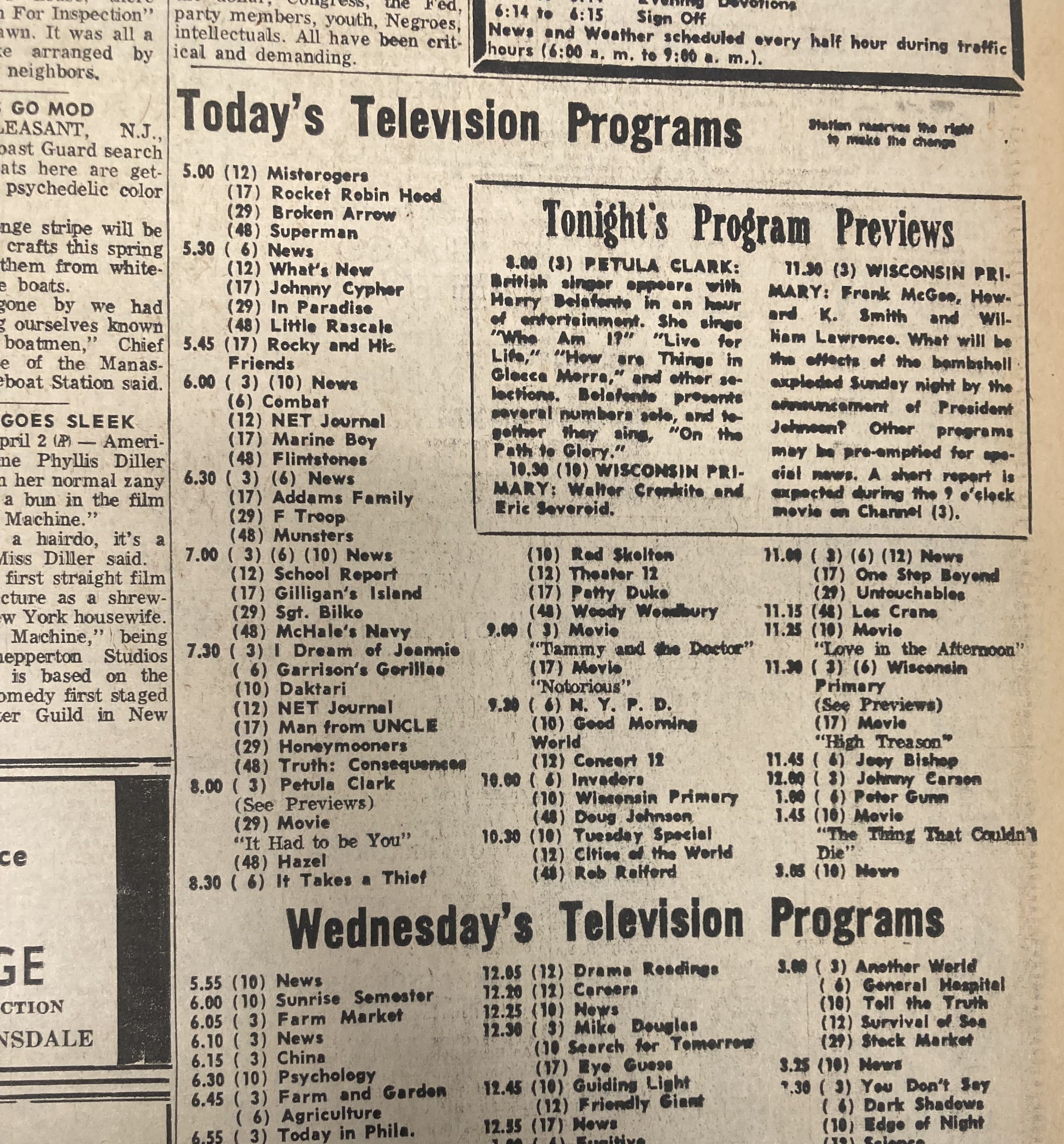
If you’ve only ever lived in a world where you can scroll through the TV guide on screen, here’s how you used to discover your viewing options. It was the only way to know what was on TV in the 60s, other than flipping through the channels.
How you hunted for a job or a house before the internet
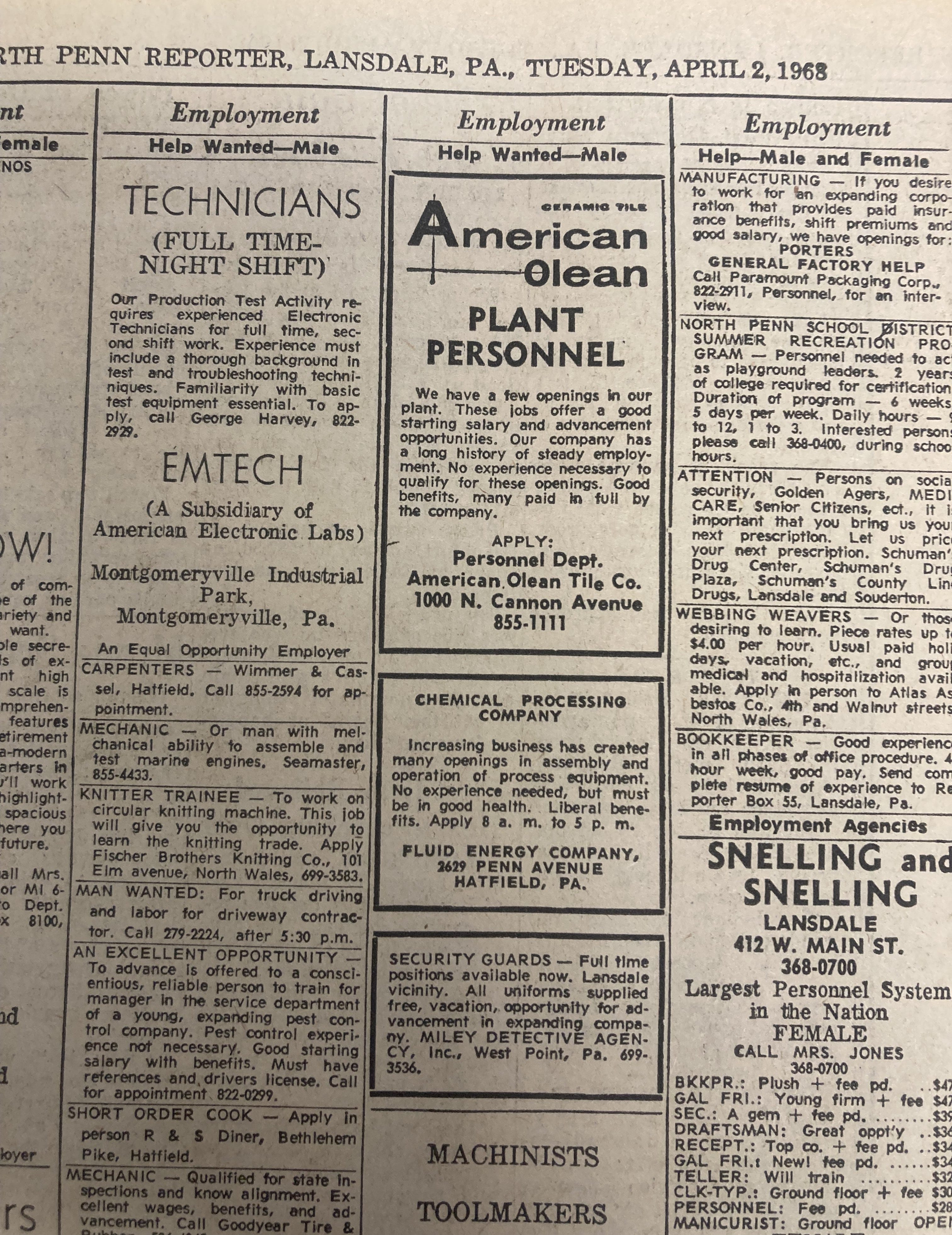
Before Indeed.com or ZipRecruiter, you checked the Help Wanted section of the newspaper to see who was hiring. Note how, even though the Equal Employment Opportunity Commission had been created in 1964, some of these 1968 Want Ads still specified whether they were looking for male or female help.
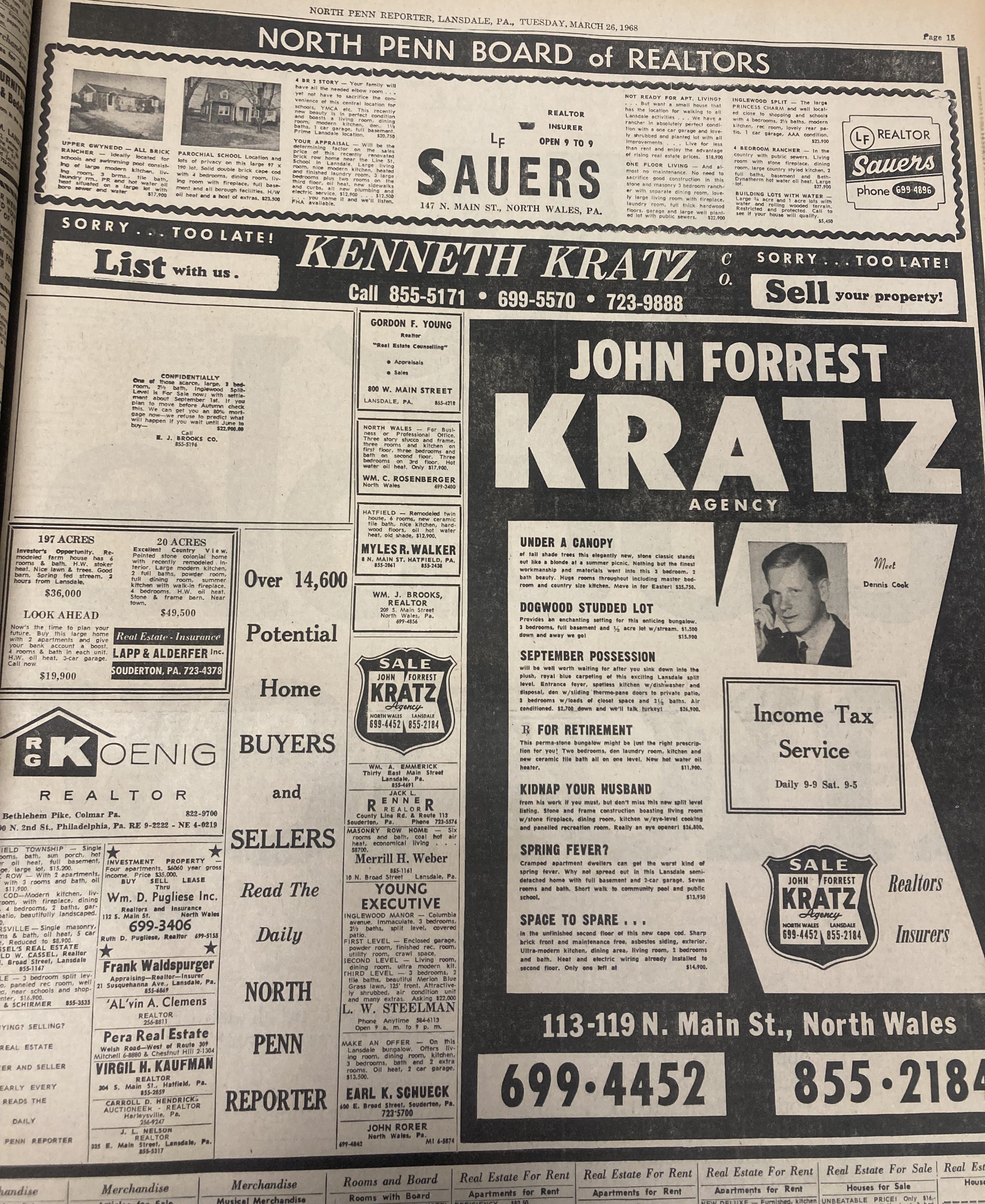
Before there was Zillow or Realtor.com, the newspaper was how you discovered which houses were available for sale in your price range. If you didn’t have a real estate agent, this was the only information you could see about the houses for sale. You were lucky if there was a photo of the house itself.
My little journey back in time was entertaining and enlightening, and I did manage to find information that helped me understand how the community was reacting to the transformation of vast swatches of farmland into hundreds of houses.
Newspapers have been called the first drafts of history, and they certainly served that purpose for me. Thanks to my local newspaper, I could access a record of what had happened. I’m not sure that someone who attempts a similar research project in future decades will have such robust “first drafts” to rely on. (Here’s hoping the Wayback Machine is as reliable.)
In many ways, the decline of local newspapers is a natural evolution. As my “time travel” shows, much of the information the local newspaper used to contain now appears on Facebook, Instagram, and websites. Companies and organizations no longer depend on newspapers to carry their ads. People no longer need to subscribe to newspapers to keep tabs on their communities’ social lives.
In fact, in some circles, it’s become fashionable to say we don’t need “The Media” anymore at all. All that talk about “fake news” has tarnished the press’s reputation.
But we’re fooling ourselves if we think that we can just say farewell to independent journalism and rely on social media and the internet for all of our information.

Why do we still need independent journalism?
America’s Founding Fathers insisted on freedom of the press because they believed it was a necessary mechanism for keeping government accountable to the people. Without a free press to inform citizens and expose corruption, they believed a free society could not survive.
America’s founders wanted the press–what we now often refer to as The Media–to act as a watchdog. They believed that a free press could monitor government actions and expose abuses of power so that public officials would remain servants of the people rather than becoming their masters.
The Founders believed that democracy requires informed citizens. They believed that free access to news, opinions, and debate would allow people to make responsible decisions about their government.
Having just fought a revolution against British rule, they recognized that tyrannical governments control information. A free press prevents the government from controlling the narrative. They knew that allowing opposition and criticism to exist without fear of censorship was essential for democracy to flourish.
Key leaders like James Madison argued that in a republic, the people must have the right to supervise the government–not the other way around.
Though news formats may evolve, the press–The Media–remains essential to a healthy democracy. In fact, research has shown that news consumption boosts political participation, improves knowledge of current affairs, and improves resilience to misinformation.

How can citizens ensure news sources are trustworthy?
Our Founding Fathers couldn’t have fathomed what “the press” in the U.S.A. would look like 250 years after its birth. Citizens can get their news any number of ways. So the question becomes–how can you tell whether the news source you’re relying on is trustworthy?
In 1997, the Committee of Concerned Journalists began a national conversation to identify the principles that underlie journalism. After four years of research, including 20 public forums around the country and a national survey of journalists, the group identified nine Principles of Journalism.
These nine principles describe what a healthy “free press” looks like. Here’s the SparkNotes version of how journalism is supposed to work, so you can evaluate for yourself how your favorite news sources measure up:
Journalism’s first obligation is to the truth. Democracy depends on citizens having reliable, accurate facts put in a meaningful context. Journalism does not pursue truth in an absolute or philosophical sense, but it can—and must—pursue it in a practical sense. This “journalistic truth” is a process that begins with the professional discipline of assembling and verifying facts.
Its first loyalty is to citizens. While news organizations answer to many constituencies, including advertisers and shareholders, the journalists in those organizations must maintain allegiance to citizens and the larger public interest above any other if they are to provide the news without fear or favor.
Its essence is a discipline of verification. When the concept of objectivity originally evolved, it did not imply that journalists are free of bias. It called, rather, for a consistent method of testing information—a transparent approach to evidence—precisely so that personal and cultural biases would not undermine the accuracy of their work. The method is objective, not the journalist.
Seeking out multiple witnesses, disclosing as much as possible about sources, or asking various sides for comment, all signal such standards. This discipline of verification is what separates journalism from other modes of communication, such as propaganda, fiction, or entertainment.Its practitioners must maintain an independence from those they cover. Independence is an underlying requirement of journalism, a cornerstone of its reliability…While editorialists and commentators are not neutral, the source of their credibility is still their accuracy, intellectual fairness and ability to inform—not their devotion to a certain group or outcome.
It must serve as an independent monitor of power. Journalism has an unusual capacity to serve as watchdog over those whose power and position most affect citizens. The Founders recognized this to be a rampart against despotism when they ensured an independent press; courts have affirmed it; citizens rely on it.
It must provide a forum for public criticism and compromise. It also should strive to fairly represent the varied viewpoints and interests in society, and to place them in context rather than highlight only the conflicting fringes of debate. Accuracy and truthfulness require that as framers of the public discussion we not neglect the points of common ground where problem solving occurs.
It must strive to make the significant interesting and relevant. Journalism is storytelling with a purpose. It should do more than gather an audience or catalog the important. For its own survival, it must balance what readers know they want with what they cannot anticipate but need.
It must keep the news comprehensive and proportional. Keeping news in proportion and not leaving important things out are also cornerstones of truthfulness. Journalism is a form of cartography: it creates a map for citizens to navigate society. Inflating events for sensation, neglecting others, stereotyping or being disproportionately negative all make a less reliable map.
Its practitioners must be allowed to exercise their personal conscience. Every journalist must have a personal sense of ethics and responsibility — a moral compass. Each of us must be willing, if fairness and accuracy require, to voice differences with our colleagues, whether in the newsroom or the executive suite.
These principles formed the basis of a book, The Elements of Journalism, which has been updated several times to keep up with the evolution of technology and society. In the preface of the most recent edition, published in 2021, the authors summed up in a single paragraph the forces currently at play, as well as the stakes:
“No part of this book has been untouched by the galvanic forces of technology, fragmentation, economic chaos, and the rise of antidemocratic movements around the world. The platform companies such as Facebook and Google are now the most important media forces shaping our information lives, and their algorithms, which are designed to distinguish us from one another to help them sell targeted advertising, have helped bad actors know what can separate us politically, creating rich opportunities for authoritarians to exploit. Despots, in turn, will always call the press the enemy of the people for the simple reason that journalism is a force for democracy.”
If you care about American democracy surviving to celebrate its next milestone birthday, Bill Kovach and Tom Rosenstiel explained in the preface of The Elements of Journalism why doing your part to understand and support journalism is essential:
“If those who practice journalism and those who consume it do not understand journalism’s purpose in society and cannot differentiate journalism from political advocacy and propaganda, or opinion mongering from reporting, if they do not understand the discipline of verification or the requirements of passionate, open-minded inquiry, it is not journalism that is threatened. It is democracy…
Democracy and the press, as Joseph Pulitzer warned a century ago, really do rise and fall together.”