

What your history teacher left out (and why it still matters)
A president's boyhood home delivers a history lesson hiding in plain sight

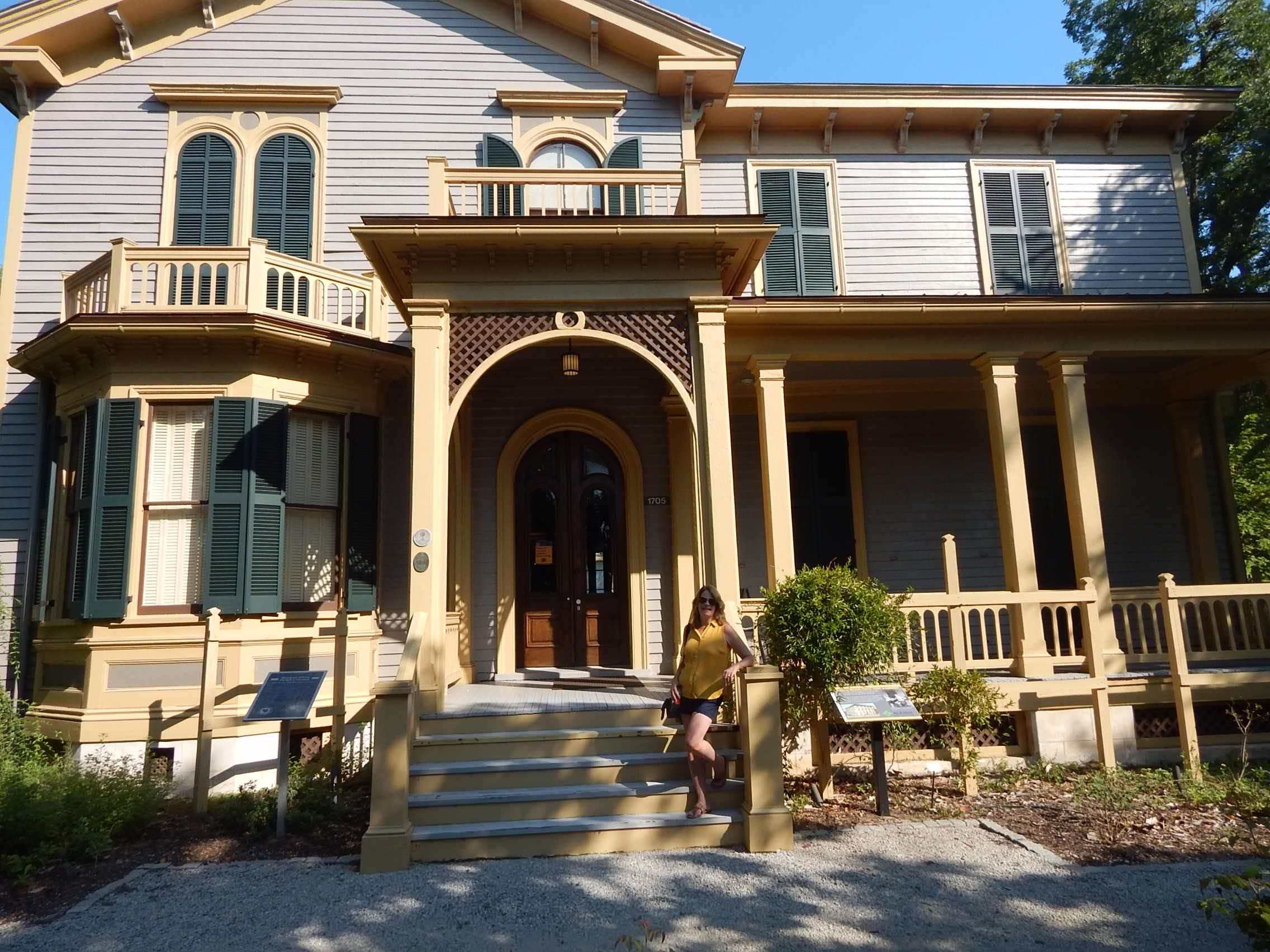
When our youngest child headed off to college, my husband and I planned a fly-drive vacation to take our minds off our newly empty nest. Since one of my personal goals is to visit all the homes and historic sites associated with U.S. presidents, I pitched a trip centered on Tennessee, which is home to four presidential museums. I sold my husband on the excursion by planning an itinerary that would also offer us a chance to see places we hadn’t been before–Nashville and Asheville, N.C.–as well as an old favorite, Charleston.
One of the things I love about road trips is that you can round out your itinerary with points of interest along the way to break up the trip. When I discovered that Woodrow Wilson’s boyhood home is in Columbia, S.C., a natural stopping point on the way to Charleston, I seized the chance to cross another site off my presidential bucket list.
As luck would have it, the Wilson home was closed the morning we happened to be in Columbia. I told my husband, who’s been a good sport about my presidential list, that if we walked the grounds, we could admire the architectural details of the 1871 Italian-villa-style home, and it would count towards crossing the site off my list.
Since no one was around, we climbed the steps of the front porch to peek in the windows, and that’s where the house’s caretaker found us. Delighted to find history buffs (they can be kind of hard to come by these days), the caretaker opened the door for us to have a look around the home where the Wilson family lived while Woodrow’s dad served as pastor of the First Presbyterian Church.
We soon discovered that this wasn’t your typical historic site featuring the furnishings and belongings of its prominent former residents. About a decade ago, the site was reimagined as the Museum of the Reconstruction Era, using the Wilson family’s experience during the post-Civil War period as a lens to examine the complexities of both Reconstruction and Woodrow.
Wilson is of course best known as the president who led the U.S. through World War I, and as the leading architect of the League of Nations, the first worldwide organization focused on maintaining global peace.
Like me, you may recall hearing rumblings about Wilson being a racist in recent years, but not have gotten the whole story. The museum’s exhibits caught me up on why Wilson’s legacy has come under scrutiny.
Elected in 1912, Wilson was the first Southerner elected president since the Civil War. Many believe his tone and policies while in office set back civil rights for decades. Both Wilson and many members of his cabinet held segregationist views and permitted the reintroduction of racial segregation into federal agencies.
While he was in the White House, Wilson also hosted a screening of the film The Birth of a Nation, which portrayed Reconstruction as a time when vengeful former enslaved people, opportunistic White scalawags, and corrupt Yankee carpetbaggers plundered and oppressed the former Confederacy until respectable White southerners rose up and restored order. Many historians credit the film with fueling the Ku Klux Klan’s resurgence after World War I.
The lesser-known stories of the Reconstruction
If you don’t recall learning much about the Reconstruction Era in your high school history classes, you’re not alone. I remember learning that after the Civil War, slavery was abolished, African Americans gained the right to vote, and were granted equal protection under the law.
But I don’t recall spending time discussing the messy legal, social, and political challenges that arose during Reconstruction. We didn’t study how the advances of newly freed Black Americans triggered a backlash, and the degree to which white Southerners strove to restore white supremacy.
I learned a lot of history I didn’t previously know at the Museum of the Reconstruction Era. How Black workers who voted for the Republican Party were fired or evicted. How the Ku Klux Klan and other groups employed intimidation, arson, and murder to suppress Black voter turnout and harm Black-owned institutions. How, as the Northern political will for intervention faded, white Southerners successfully “redeemed their state governments and instituted sweeping Jim Crow laws.
Once you learn more of our country’s backstory, it’s easier to understand why America is still suffering from the wounds of fractures first incurred more than a century and a half ago. And the more you know about what transpired during Reconstruction, the more eerily familiar recent happenings in the U.S. seem.
It seems that Winston Churchill was truly on to something when he said, “Those that fail to learn from history are doomed to repeat it.”
Why has some of America’s history been hidden?
Three decades ago, sociologist James Loewen analyzed the twelve leading American history textbooks because he wanted to understand why high school American history courses bored students to tears. His project evolved into a book, Lies My Teacher Told Me, which reveals how history textbooks oversimplify and sanitize the past to present a narrative of unquestioning patriotism:
“The stories that history textbooks tell are predictable; every problem has already been solved or is about to be solved. Textbooks exclude conflict or real suspense. They leave out anything that might reflect badly upon our national character.”
Loewen notes that the internment of Japanese Americans during World War II was barely mentioned in American history textbooks for decades. It wasn’t until the passage of a 1988 law apologizing for the “grave injustice” and paying $20,000 to each survivor of the camps that textbooks started devoting two pages to discussion of the internment.
According to Loewen, there is a reciprocal relationship between the truth about the past and justice in the present: “When we achieve justice in the present, remedying some past event or practice, then we can face it and talk about it more openly, precisely because we have made it right.”
Says Loewen: “Conversely, a topic that is mystified or distorted in our history, like secession, usually signifies a continuing injustice in the present, like racism. Telling the truth about the past can help us make it right from here on.”
How to discover what really happened
According to Loewen, “When we understand what really happened in the past, then we know what to do to cause our nation to remedy its problems in the present.”
Think about how many of the pickles that we seem to get ourselves into as a country might be avoided if only we were more knowledgeable about our history. Colonial Williamsburg, the largest U.S. history museum in the world, has adopted the motto “that the future may learn from the past,” and I believe that we should follow their lead.
So let’s give America the type of birthday gift that will keep on giving long after this Semiquincentennial year is over–a commitment to becoming better informed about our country’s past. If you’re in, here are some practical ideas about how you can do your part:
Visit a museum or historic site. America is home to 64 National Historic Parks and 85 National Historic Sites. Beyond that, there are over 35,000 museums in the U.S., more than half of which fall into the history category. Check the National Parks website for Historic and Cultural Parks and National Heritage Areas. See The History List for road trip ideas. Visit Great American Treasures to craft an adventure tailored to your interests.
Subscribe to the free email newsletter Letters from an American. American history professor Heather Cox Richardson explores America’s history and provides context for current events. For a sample of what she writes, check out the February 9, 2026 letter, which gives greater context for understanding the significance of Bad Bunny’s Super Bowl performance.
Choose a period of history that interests you and give yourself a reading or viewing assignment (no quizzes or tests necessary). I recently read the book Blue-Collar Conservatism: Frank Rizzo’s Philadelphia and Populist Politics because I wanted to better understand what was happening in the city my parents decided to leave behind in the 70s for the burbs. I found it fascinating to learn about what was unfolding around me while I was a blissfully unaware child.
Read Lies My Teacher Told Me, which is described as an “eye-opening critique of existing textbooks and a wonderful retelling of American history as it should–and could–be taught.” For extra credit, read Lies My Liberal Teacher Told Me, written as a counterpoint to Lies My Teacher Told Me so as to “debunk the historical myths that have infiltrated America’s school curricula.” Compare, contrast, and decide for yourself how America falls short in teaching its history. You’ll be much better informed if your local school board begins to debate history curricula.
Thomas Jefferson once said, “Whenever the people are well-informed, they can be trusted with their own government.” Sounds like committing to learn our history would be the perfect 250th birthday gift for America.
I am a big fan of learning the facts about what happened for yourself. Here's to your child and all those young people who are interested in learning American history!
I found this really interesting. Just reflecting on some recent experiences of my own, I wonder if part of the problem is getting people to be honest about and acknowledge what has happened in the short term. All the while there is denial, arse covering, obfuscation and misdirection, it would be very difficult to get an accurate record, let alone an agreed one. My ex-husband is a believer in grand conspiracy theories (including Holocaust denial), so I am acutely aware of the fragility of the truth.
I think it's great that you have encouraged your family to gain a deeper understanding of history. My youngest child is bucking the trend away from arts degrees to study History, and it gives me hope for the future that young people can still be interested.